TL;DR
Yes — a CCTV drain survey is the definitive way to confirm whether a pipe is cracked, deformed, or fully collapsed, grading each defect against the industry-standard WRc scale from 1 (minor) to 5 (severe). A single-run survey costs £90–£160, and where a defect is confirmed, repair costs range from £350–£850 for a patch liner up to £1,500–£5,000-plus for full excavation. Getting the grade right first is what stops you paying for excavation when a liner would have done the job. Request a fixed-price quote online to get your pipe assessed properly.
Will a CCTV drain survey tell me if my pipes are cracked or collapsed?
Yes. A waterproof camera fed through the pipe records the full internal condition, and every defect found is graded using the WRc Manual of Sewer Condition Classification (MSCC5) — the same system used across the UK drainage industry. That grading tells you not just that a pipe is damaged, but exactly how severe the damage is and what repair category it falls into.
What do cracked and collapsed pipes actually look like on camera?
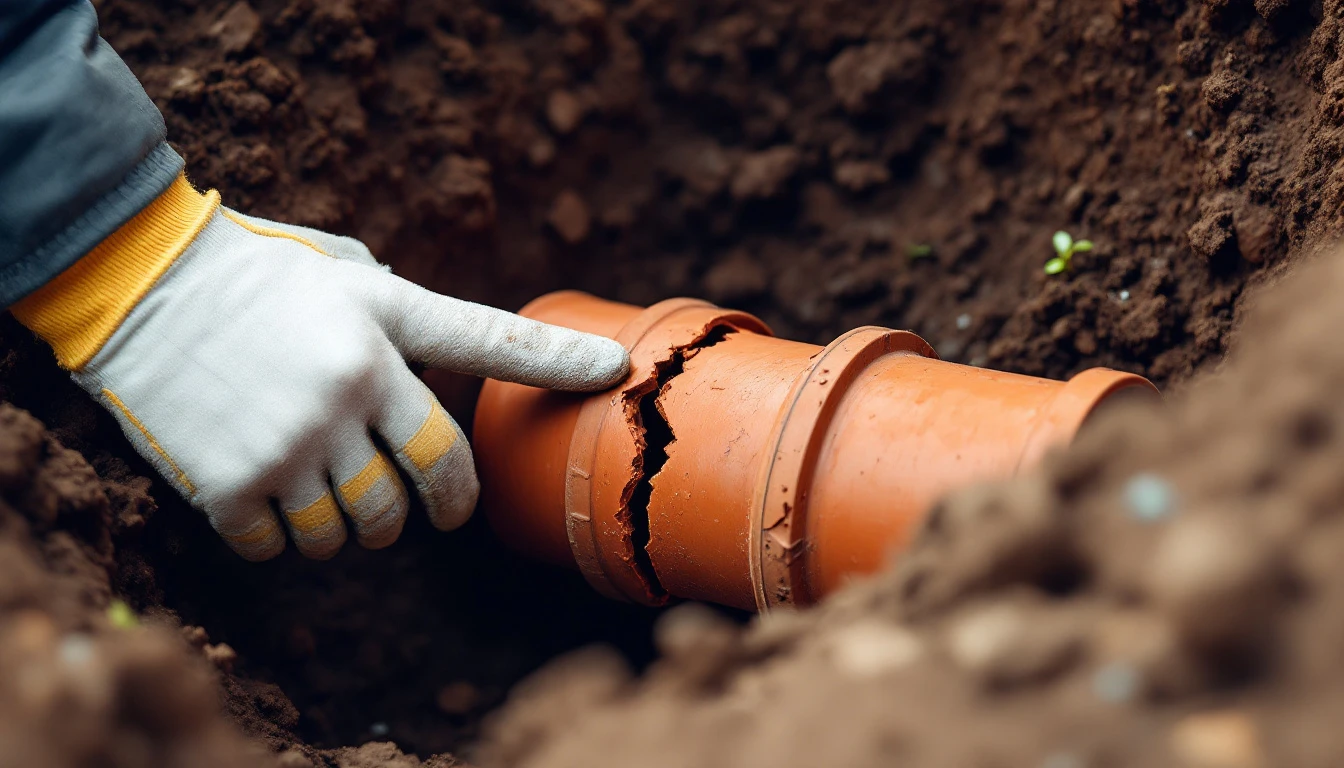
A crack shows as a visible fracture line running along or across the pipe, with the pipe generally still holding its round cross-section — typically a lower WRc grade. Deformation looks different again: the pipe has softened or been squeezed out of shape by ground pressure, taking on an oval profile that restricts flow and traps debris even though it hasn't fully failed. A full collapse is unmistakable on footage — the pipe wall has folded inward or is missing across part of the run, usually blocking the pipe almost entirely and graded 4 or 5, the most severe end of the WRc scale. Root ingress and displaced joints often accompany all three, since a crack or a gap is exactly what a searching root exploits.
Why do Swindon's drains crack or collapse in the first place?
The cause is rarely random. Central Swindon sits largely on Gault Clay, which swells when wet and shrinks significantly in dry spells — a seasonal cycle that stresses buried pipe joints year after year until they crack or separate, particularly around Old Town and the streets off Devizes Road. Large parts of north and west Swindon, meanwhile, were fitted with pitch fibre pipe through the 1960s and 1970s, a material with a design life of only 40 to 50 years that a great deal of the town's drainage has now reached or exceeded — it softens with moisture and gradually loses its circular shape. Add mature street trees, and any crack or displaced joint quickly becomes a root entry point, accelerating the damage further.
How much does it cost to fix a cracked or collapsed drain?
The right repair depends entirely on the WRc grade the survey assigns — a minor crack doesn't need the same fix as a full collapse, and paying for excavation when a liner would do wastes money.
| Defect / repair | Typical range | Duration |
|---|---|---|
| CCTV single-run survey | £90–£160 | 30–60 min |
| Patch liner (one defect) | £350–£850 | Half-day |
| Full CIPP relining (6–10 m run) | £110–£190/m (≈£900–£1,900) | ~1 day |
| Excavation & replacement | £1,500–£5,000+ | 1–3 days |
Before any relining or patch work is carried out, the pipe is jetted clean, typically using hydro jet drain cleaning, so the liner can sit flush against the pipe wall rather than over old debris.
Does a crack always need the same fix as a collapse?
No, and this is exactly why the survey grade matters. A minor crack with the pipe otherwise intact often only needs a patch liner covering the single defect. A longer section of deformation or displaced joints usually calls for a full CIPP relining run, creating a continuous new pipe within the old one. A genuine collapse — where the pipe has folded or shifted so far out of alignment that a liner can't seat correctly — is the one scenario where excavation and replacement is still the more reliable option. Our guide to pipe relining covers how the no-dig repair itself works once a survey has confirmed it's the right category of fix.
What happens if a cracked drain is left unrepaired?
A crack rarely stays a crack. Left alone, it widens under continued ground movement, invites root ingress, and eventually deforms or collapses the section entirely — turning a £350–£850 patch job into a multi-thousand-pound excavation. The process is usually gradual rather than sudden, which is exactly why a survey catches the problem cheaply if it's carried out early rather than after the pipe has already failed. Recurring blockages that keep coming back despite repeated clearing are one of the clearest warning signs that a structural defect, not just debris, is the underlying cause. If you're seeing that pattern, our guide to the most common signs a drain is blocked helps you tell a simple blockage apart from a structural one before it gets worse.
Get your pipe assessed properly
A CCTV drain survey is the only reliable way to know whether you're dealing with a minor crack or a full collapse — and the WRc grade it produces is what a fair repair quote should be based on. Every figure above is a typical range — fixed price confirmed before booking, once the exact defect is known. See our pricing guide for every survey and repair band, or request a fixed-price quote online for a survey across Swindon and the surrounding Wiltshire area, typically 60 to 90 minutes across Swindon, 24/7 for urgent cases.