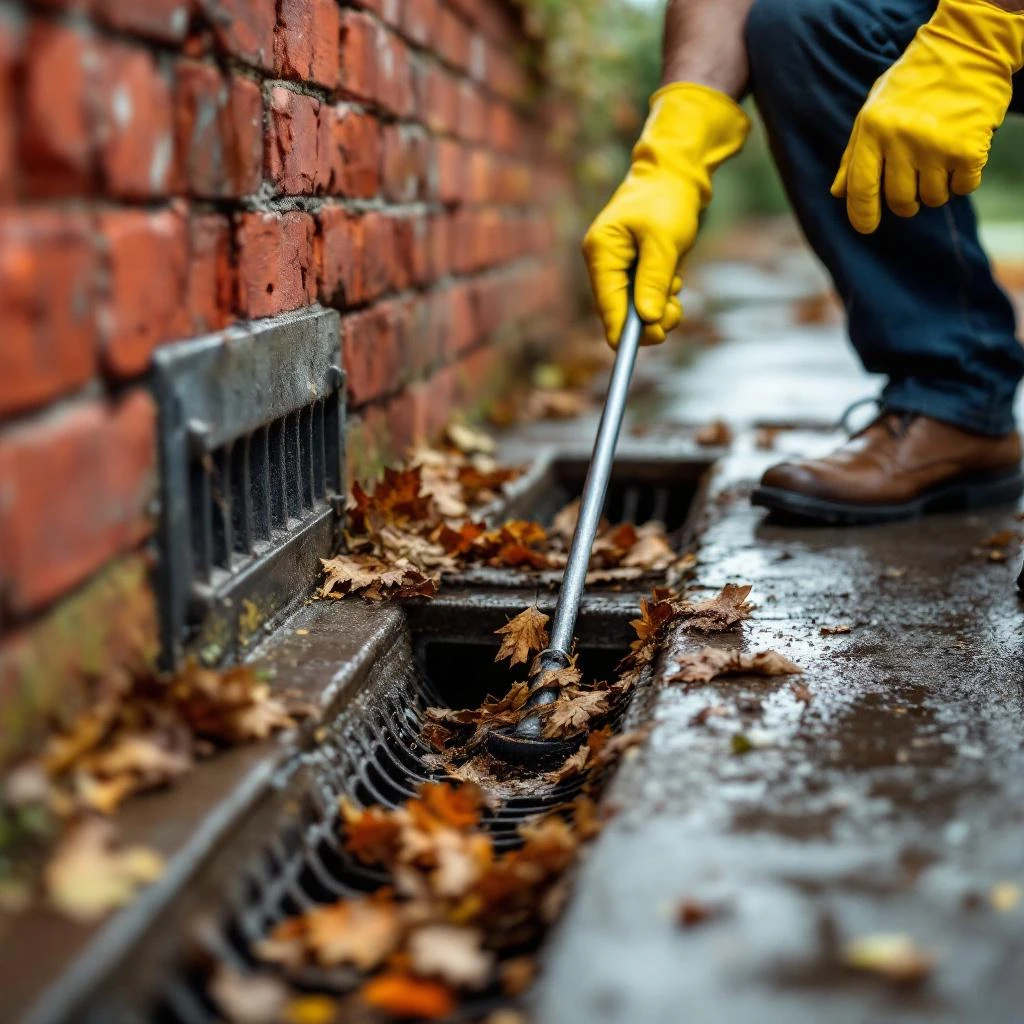
Swindon's drainage challenges are not just a product of its rapid expansion — they are rooted in the geology beneath the town. Understanding how chalk, greensand, and clay interact with buried drainage pipes explains why certain types of problems are so common in different parts of Swindon, and why the same solution that works in one street may not be appropriate on the next.
The Geological Foundation of Swindon
Swindon sits at the junction of several distinct geological formations. The town centre and much of the built-up area sits on Upper Greensand and Gault Clay, while the ridges to the south and east are underlain by chalk from the Marlborough Downs. The Vale of White Horse to the north brings Jurassic Oxford Clay into the picture. This geological complexity means ground conditions can vary enormously — sometimes dramatically — even between neighbouring streets.
This matters for drainage because buried pipes do not sit in a stable, uniform medium. They sit in ground that expands, contracts, dissolves, and moves over time. The pipe material and the ground it sits in interact in ways that engineers understand, but that take decades to manifest as visible problems.
How Chalk Affects Drainage Pipes
Chalk is porous and permeable — it absorbs water readily rather than channelling it laterally. During periods of heavy rainfall, the water table in chalk areas can rise significantly and quickly. When the water table rises above the invert level (the lowest internal point) of a drainage pipe, groundwater can be forced back into the drainage system — a problem engineers call groundwater infiltration. Properties in the chalk-influenced areas to the south and east of Swindon, including parts of Wroughton and the hillside developments south of the Old Town, are particularly susceptible.
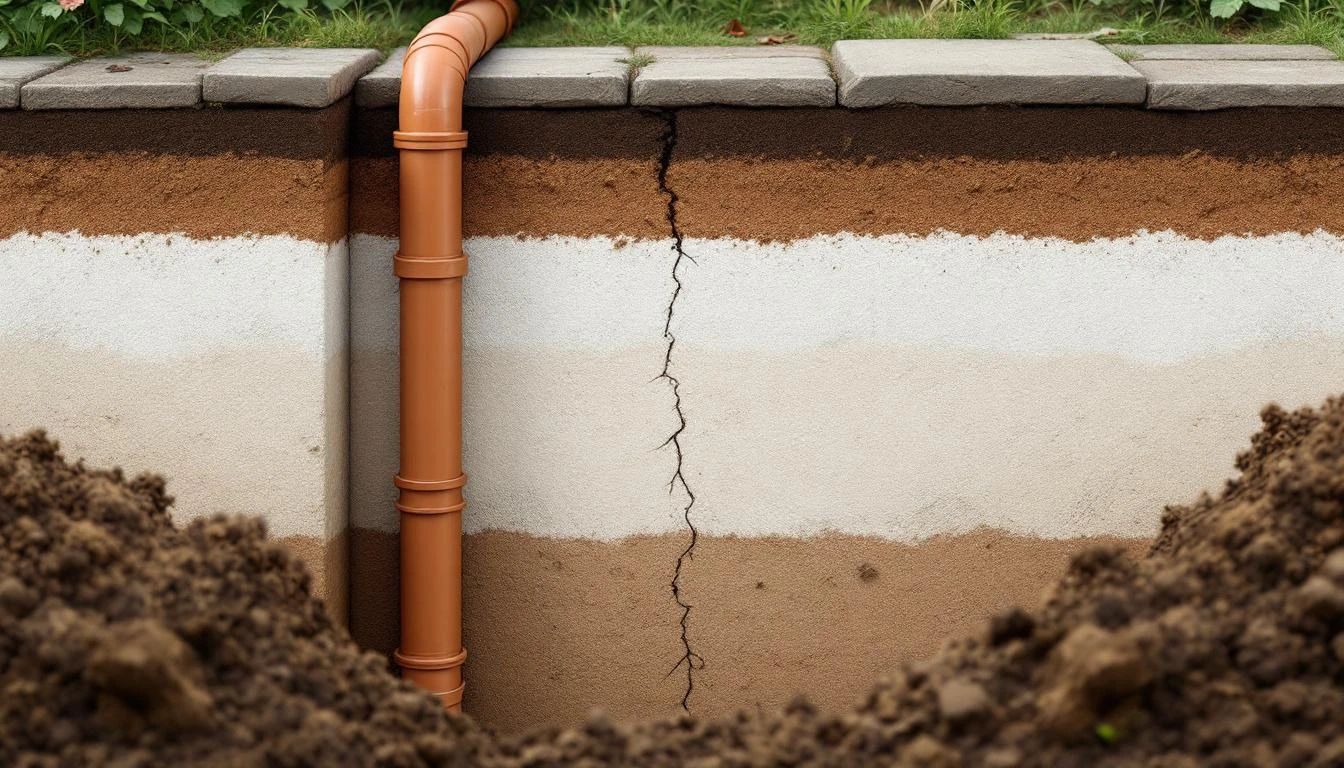
Chalk also dissolves slowly in slightly acidic water, a process called chemical weathering. Over decades, this creates small voids and cavities in the chalk beneath buried pipes. As voids develop, ground support is lost and pipes can settle unevenly, causing joint displacement. A displaced joint is an open invitation for tree roots, and once roots are established inside a pipe, rapid deterioration follows.
Gault Clay: Swindon's Seasonal Challenge
The Gault Clay beneath much of central Swindon is highly plastic — it swells when wet and shrinks significantly when dry. This cycle of expansion and contraction exerts lateral and vertical stress on buried drainage pipes throughout the year. Over time, this stress cracks clay pipes and displaces joints, particularly at bends and junctions where the pipe is already under greater structural load.
In a dry summer like those Swindon increasingly experiences, Gault Clay can shrink by several centimetres, pulling away from buried pipes and creating voids that collapse suddenly when autumn rains arrive. The resulting ground movement can crack even structurally sound pipes. Many drainage problems in the older parts of Swindon — around the Old Town, Victoria Road, and the streets off Devizes Road — stem directly from this seasonal clay behaviour.
Greensand and Lateral Water Movement
The Upper Greensand beneath parts of Swindon is well-drained but allows lateral water movement more freely than clay. Where greensand sits adjacent to clay, this creates zones of differential settlement — the ground on either side of a boundary moves differently, and buried pipes crossing that boundary are subjected to twisting stresses that can crack even modern materials over time.
The Impact of Rapid Development on Ageing Infrastructure
Swindon expanded faster than almost any other UK town during the 1960s through 1990s. Many housing estates were built on land assessed for drainage suitability at the time, but the drainage systems installed were not designed with the 40 or 50-year lifespan that is now apparent.
Pitch fibre pipes — used extensively in Swindon housing developments from the late 1950s through the mid-1970s — are now well past their expected service life. This material absorbs moisture, softens, and gradually loses its circular cross-section. As it deforms, it creates low spots where water pools and debris accumulates. On Gault Clay ground, the seasonal movement accelerates this process. Estates in north Swindon, Walcot, Penhill, and Park South frequently have pitch fibre drainage that has begun to fail.
Practical Implications for Swindon Homeowners
Knowing your local geology helps make sense of drainage problems that seem disproportionate to their apparent cause:
- Drains may need professional jetting more frequently than the national average, particularly in clay areas where ground movement roughens pipe interiors and creates debris traps
- Tree roots cause more drain damage in chalk areas, where the dissolving bedrock creates the joint displacement that roots exploit
- Recurring wet patches in gardens during winter may indicate groundwater infiltration rather than a pipe failure — the right repair depends on knowing which it is. You can check whether your property sits in a known flood-risk zone using the Environment Agency's long-term flood risk checker
- Older properties in central Swindon have a higher statistical rate of joint displacement and pipe deformation than properties in newer areas
Diagnosing Geology-Related Drain Problems
The only reliable way to understand whether geological factors are affecting your drainage is a CCTV drain survey. The survey footage will show whether pipes are cracked, displaced, deformed, or root-affected — and will indicate whether the pattern of damage is consistent with ground movement, root ingress, or infrastructure age.
Where survey results show structural defects, our drain repair and pipe relining service offers trenchless fixes that restore full pipe integrity. Pipe relining in particular is well-suited to Swindon's conditions — it creates a smooth, continuous new pipe within the existing damaged one, eliminating joints and restoring structural strength without excavating your garden or driveway.
Contact Blocked Drains Swindon online for expert drainage advice specific to your area of Swindon. We understand the ground conditions and can advise on the most appropriate long-term solution for your property.