TL;DR
Whether a blocked drain is your responsibility or Thames Water's depends on exactly where in the system the blockage sits — inside your property boundary, it's almost always yours; once the pipe joins the public sewer, it becomes the water company's. Since 2011, most of the pipework connecting properties to the public sewer network transferred to water company ownership, which changed this boundary for a lot of older Swindon streets. If you're not sure which side of the line your blockage falls on, request a survey online and we'll tell you clearly which situation applies before any work starts.
Private Drain vs Shared Sewer: The Basic Split
Every property's drainage runs through two broad zones. The first is the private drain — the pipework serving only your property, from the fixtures inside the house out to the point where it meets a neighbouring property's pipe or joins the wider network. Everything within this zone is, in general, the property owner's responsibility to maintain and repair.
Beyond that point sits the public sewer — a larger pipe, usually shared with a number of neighbouring properties, that carries wastewater onward to treatment. In Swindon, that network is operated by Thames Water across most of the town, though parts of the wider Wiltshire area fall under Wessex Water. Blockages and defects in the public sewer are the water company's responsibility to clear and repair, funded through the wastewater element of your water bill rather than a separate callout charge.
Where exactly the boundary sits usually isn't obvious just from looking at your garden. It rarely lines up neatly with the edge of the driveway or the garden fence — it follows the pipe route, which was laid according to whatever made engineering sense at the time the street was built, not according to modern property boundaries. The only way to see it clearly is to trace the pipe run itself, which is exactly what a professional drainage survey is for.
How the 2011 Sewer Transfer Changed Things
Until 2011, a lot of pipework that most homeowners assumed was "public" was actually still privately owned — specifically, lateral drains and sewers shared between two or more properties, even where they sat well beyond a single house's boundary. A significant nationwide transfer of ownership that year moved most of this shared pipework to the water companies, simplifying who's responsible for what in streets where several properties share a single connecting pipe before it reaches the main sewer.
This matters a great deal in Swindon's older terraced streets, where a row of Victorian or GWR-era houses often shares a single lateral drain running behind the properties. Before 2011, a blockage in that shared section could leave neighbours arguing over who should pay for the repair. Since the transfer, that shared section is generally the water company's to maintain — though the pipework serving each individual house, right up to where it joins the shared drain, remains the homeowner's.
Signs the Blockage Is Shared, Not Just Yours
A few signs point toward a shared sewer problem rather than a private drain issue confined to your own property:
- More than one property on the street is experiencing drainage problems at the same time
- The blockage is well beyond your boundary, past the point where your own pipework would reasonably end
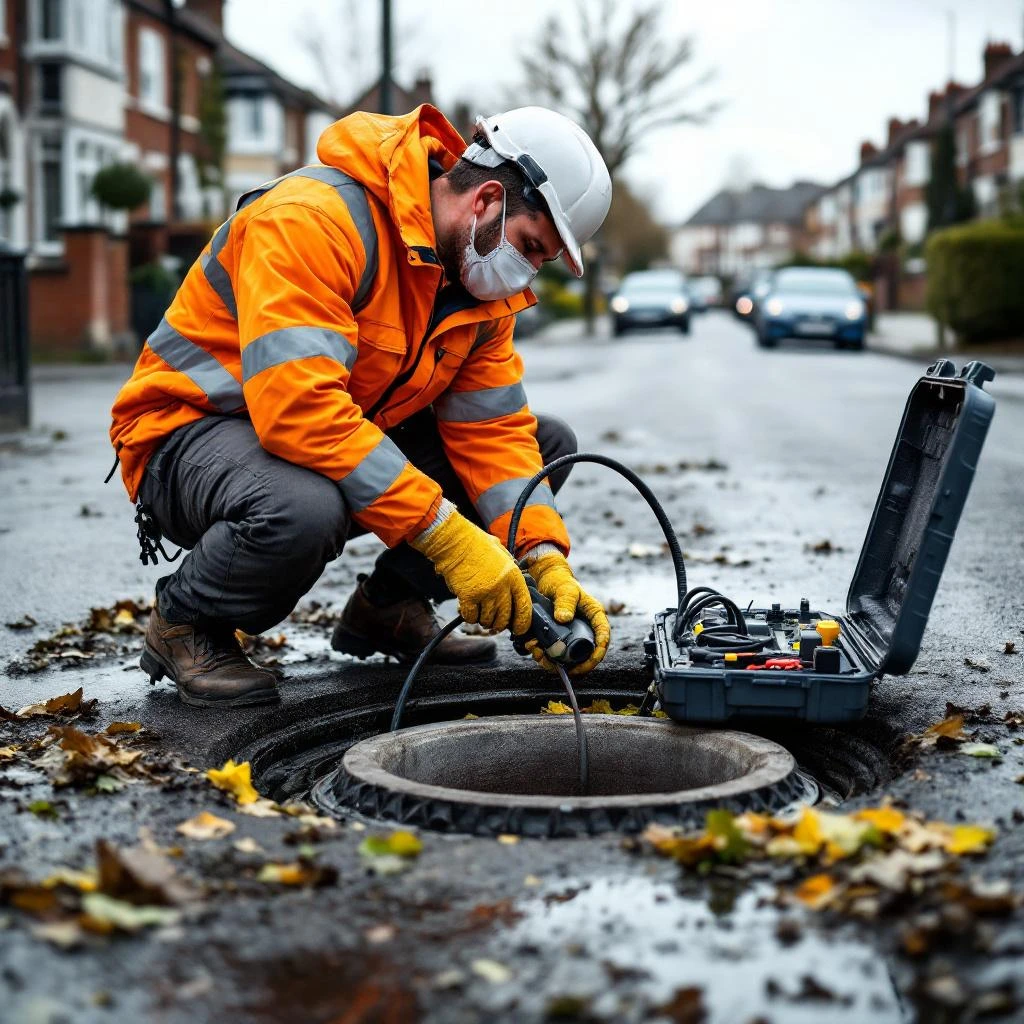
- A CCTV drain survey traces the blockage to a point of connection with a larger, shared pipe rather than anything within your own runs
If any of these apply, the fastest route to a fix is usually reporting it directly to the water company rather than commissioning private repair work on pipework that isn't yours to fix. If a dispute over responsibility arises and can't be resolved directly, the Consumer Council for Water offers independent guidance to household customers on exactly this kind of boundary question.
What to Do If You Think It's a Shared Sewer Problem
If several properties are affected, or a survey has traced the issue beyond your own pipework, the water company should be your first port of call for that section of pipe. They're obliged to investigate and clear blockages in the public sewer network at no direct charge, since it's already funded through your wastewater charges. Where the picture is unclear — which is common, since the boundary isn't always obvious from above ground — a drainage investigation survey gives you, and if needed the water company, clear evidence of exactly where the fault sits and whose responsibility it is to fix.
When It's Definitely Your Responsibility
Anything within your own property boundary — the pipework serving your kitchen, bathroom, and any external gullies, up to the point where it leaves your land — is your responsibility to maintain, repair, and clear when it blocks. This is the majority of the blockages we're called out for: a single property affected, a clear blockage within a recognisable section of private pipe, and no sign that neighbouring properties are experiencing the same problem. Our emergency drain services cover exactly this kind of situation, from a straightforward blockage to a sewage backup that needs an urgent response — and our guide to what to expect from an emergency callout walks through the process step by step.
Get a Clear Answer, Not a Guess
Working out which side of the boundary a blockage sits on isn't always obvious without professional equipment, and getting it wrong wastes time — and potentially money — on repair work that was never yours to carry out. Request help online and we'll assess the blockage, tell you plainly whether it's a private or shared sewer issue, and, if it's the latter, help you understand how to report it to the right water company. We cover Swindon and the surrounding Wiltshire area, including Purton.